
Why Drywall Cracks Appear When Michigan Heat Kicks On
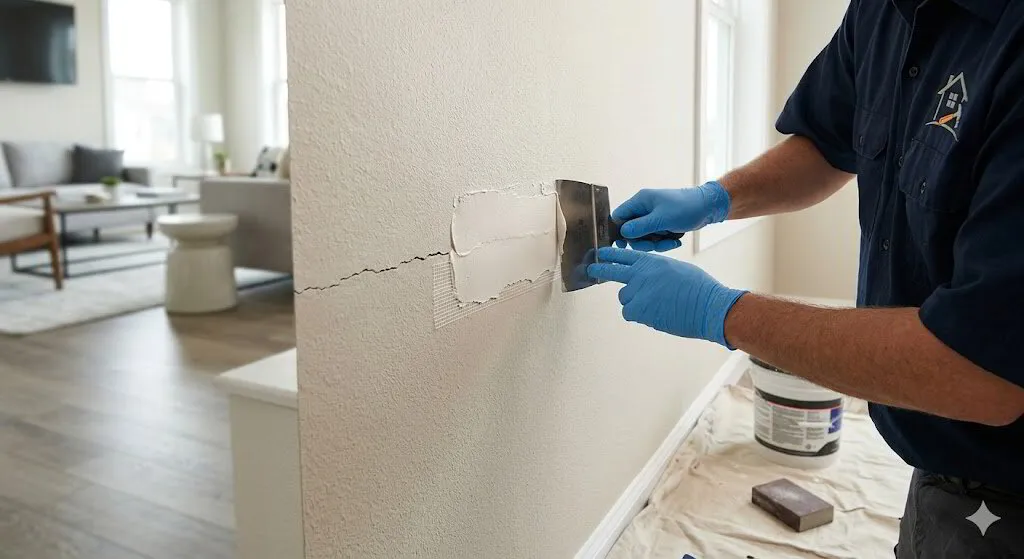
Why Drywall Cracks Appear When Michigan Heat Kicks On
In Southeastern Michigan, the heat is usually on by mid-November. NOAA's 1991–2020 climate normals for Detroit Metro Airport put the middle date for the first 32°F night around October 27, and the first hard freeze near November 7. By then, a house that spent the summer with windows open and air-conditioning running is closed up, the furnace or heat pump is cycling, and indoor air is often much drier than it was in September.
That is when many homeowners in Northville, Novi, Ann Arbor and the rest of Metro Detroit notice a hairline at a corner, a short crack above a door, or a seam that was invisible in August. The question is whether this is a seasonal line or a crack that needs more than a swipe of spackle.
This guide is about why drywall cracks appear when Michigan heat kicks on, what you can watch for in the first week, and when a taped repair or a professional look is the better next step. It is written for homes in the counties we serve, including Oakland, Wayne and Washtenaw.
What the first weeks of heat do to a wall
Drywall, joint compound, paint and the wood or steel behind them all respond to temperature and humidity, but not at the same speed. In summer, a Michigan house often carries more indoor moisture. When the heat comes on and the house is shut, that moisture drops. Wood framing can shrink slightly. A joint that was already tight or poorly taped has less room to move, and the paper face opens a line.
The usual places are predictable:
- Inside corners, where two planes of drywall meet
- The joints above doors and windows, where the framing already concentrates stress
- The line where a wall meets a ceiling, especially in a long hallway
- Seams that were repaired with filler alone last winter and have opened again
A single cold night does not usually create a new structural problem. It reveals a joint or a corner that was already under stress. Freeze-thaw cycles outside the house, and the natural movement of an older foundation, can add to that stress over years. The heat turning on is the moment the surface reports it.
If the crack follows a water stain, a soft spot, or a musty closet, treat it as moisture first, not as a seasonal hairline. Repairs after a leak or after a plumber has been in the wall belong on a different path, such as repairing walls after plumbing work or water-damaged drywall repair.
How to tell a seasonal hairline from a crack that needs more attention
Hold a flashlight low against the wall and look at the shape of the line, not just the fact that it is there.
A seasonal hairline is usually narrow and clean. It often appears at a corner or above a casing after the heat has been on for a few days. The wall feels firm. The line may be easier to see on a bright, dry afternoon than it was in September.
A failed seam runs in a fairly straight line, sometimes with a ridge or a bubble where old tape is letting go. Cool, dry air makes it obvious. Filler alone will not hold it. It needs to be opened, taped and finished, the way a proper seam and crack repair is done.
A crack that should be inspected is wider than a hairline, stepped, or diagonal across a wall, especially if a door or window has started to stick, or if several new cracks appeared in the same week in more than one room. Those patterns can point to movement that a cosmetic patch will not solve.
Older plaster in many Southeastern Michigan homes, including houses in older Detroit neighborhoods and some farmhouses farther out, should not be treated like gypsum board. If the wall is plaster, see our guide to plaster ceiling and plaster repair and plaster repairs before you cut or sand.
What to do in the first week after you notice the crack
Do not paint it the morning you find it. Paint hides whether the line is still growing, and it will not hold a joint that is still moving.
Mark the ends of the crack with a light pencil tick, or take a close photograph with a coin for scale. Check it again after the house has been at a steady temperature for several days. A line that stays the same is a candidate for a proper repair when you are ready. A line that lengthens, widens, or is joined by new cracks should be looked at before you schedule a paint weekend.
Keep the indoor climate as steady as you reasonably can. A moderate, consistent set point is gentler than swinging the thermostat hard at night and airing the house out all afternoon. A portable humidifier can take the edge off very dry air, but it is not a repair, and it should not be used to soak a wall.
Leave the crack alone if the same wall is open for mechanical work. Heat is often first turned on after an HVAC visit, and new lines near an access hole are common. Close the opening with a real patch once the equipment is finished, not a smear of compound on cut paper. Repairs after HVAC work are built for that sequence.
If guests are coming before you can watch a new line for a few days, the timing is a different problem. Drywall fixes before holiday guests covers what can actually dry in a cool Michigan house in about a week, and what should wait.
Repairing a stable crack so it does not return in March
For a short, clean hairline on a firm, dry wall, a taped repair is the lasting fix. Filler alone often comes back the next time the heat cycles or the weather changes in spring. Paper tape, thin coats of compound, careful sanding and a texture that matches the rest of the wall are the difference between a line that disappears and a line you will see again in March.
Most walls in this area are not perfectly smooth. Orange peel, knockdown and older hand textures all have to be matched, or the repair will show even if the crack is closed. Prime the patch, then paint the wall from corner to corner rather than spotting the area.
Our longer walk-through of professional crack work is in the complete guide to professional drywall crack repair. Texture that has to blend into an existing finish is covered on the textured wall and ceiling page. For general wall work, see wall and ceiling repair in Southeastern Michigan and drywall repair.
Ceilings deserve more caution than a small closet hairline. A ceiling crack can be a seam, a truss movement, or a sign of moisture from above. If the ceiling is stained, sagging or soft, do not tape over it.
Preventing a seasonal line from becoming a yearly habit
You will not stop a house from moving with the seasons. You can reduce how often the same seam opens.
- Keep indoor temperature and humidity in a moderate range once the heat is on, instead of large daily swings.
- Fix leaks when you find them, including a slow plumbing drip or a window that wets a sill through a winter storm.
- Avoid slamming doors on walls that already show diagonal cracks at the casing.
- If the same seam has opened two heating seasons in a row, have it re-taped instead of filling it again.
- On older plaster, address loose keys or failed tape early, before a small line becomes a larger repair.
A small, stable hairline after the heat comes on is common in this climate. It is not automatically a foundation emergency, and it is not a reason to ignore a crack that is wide, wet or growing.
Frequently asked questions
Why do drywall cracks show up when the heat is turned on? Indoor air usually dries as the house is closed up and the furnace or heat pump runs. Drywall, tape and framing shrink at slightly different rates, so a seam or a corner that was quiet in late summer can open a hairline. The heat is often the moment you notice a stress line that was already there.
Is a hairline crack in November a foundation problem? Usually not, if the crack is narrow, clean and stable, and the wall is firm. A wide, stepped or long diagonal crack, especially with a door that now sticks, should be inspected before you treat it as a cosmetic repair. Stains, softness or a musty smell point to moisture, not dry winter air.
Should I caulk or paint a new crack right away? No. Mark the ends or photograph the crack, then wait a few days at a steady indoor temperature. Paint or caulk can hide whether the line is still growing. Repair it once it is stable, with tape if it is a seam or a crack that has returned.
Can I repair a seasonal hairline myself? A short, clean hairline on a firm, dry wall can be a taped DIY repair if you can match the texture and are willing to use thin coats. Long ceiling cracks, plaster walls, recurring seams and any crack tied to a leak are better handled by a professional.
Will a humidifier stop drywall cracks? A moderate humidifier can reduce how dry the air gets, which may limit some seasonal movement. It will not lock a house in place, and it will not repair a failed joint. It should not be used to soak a wall that is already wet.
Have a crack looked at in Southeastern Michigan
The Patch Guyz are based in South Lyon, at 20874 Hasenclever Drive, and repair walls and ceilings across Metro Detroit and Southeastern Michigan. If you are not sure whether a line is seasonal or something more, call 1-877-728-2448, text a photo to 248-759-9919, or request a photo estimate or a visit through contact us. For settling and stress cracks specifically, see settling and stress crack repair. The useful answer is a straight one: a stable hairline that needs a proper tape repair, or a crack that should be inspected before anyone paints over it.
Related Articles
Drywall Fixes Before Holiday Guests in Michigan
Thanksgiving is close. Here is which nail pops, seam lines, and small holes can be finished in a heated Michigan room this week, and which repairs sho…
Flawless Walls: The Complete Guide to Professional Drywall Crack Repair
Expert Guide to Professional Drywall Crack Repair Services Discovering cracks in your drywall can be frustrating, whether you're a homeowner dealing w…
Master Your Walls: The Complete Guide to Drywall Finishing in Southeastern Michigan
Your Ultimate Guide to Drywall Finishing Services in Southeastern Michigan Introduction When it comes to maintaining the integrity and aesthetic appea…